


A shovelful of injuries - 1

Updated: Feb 9
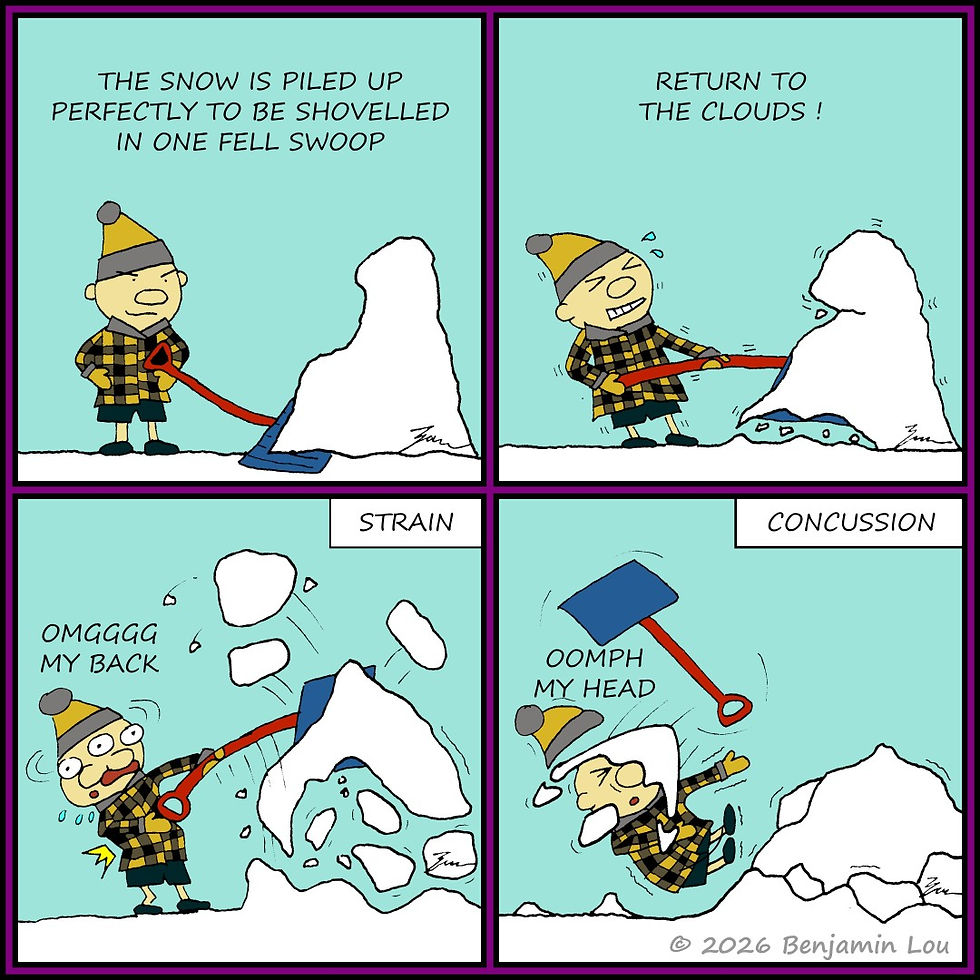
Each winter in the United States, an average of 11,500 people visit emergency rooms for a shovelful of injuries related to snow shoveling [1].
A common way of injury is a muscle strain, which occurs when we ask a muscle to contract quickly and forcefully to move or hold a load that ultimately proves to be too heavy for the muscle. A shovelful of snow can be too heavy for a muscle that doesn’t practice shoveling regularly year-round. The consequences can range from an irritation of the muscle (muscle knot) or its tendons (tendinitis) to a muscle or tendon tear.
Another way of injury is a concussion. During a fall, the head can hit the ground, and the brain, which is housed inside the skull, can be bruised and injured by impacting the inner walls of the skull.